Beach Day Sun Protection Checklist
Everything to pack and plan, in one list.
We may earn a commission when you buy through links on this page, at no extra cost to you. This does not change which products we cover. How we make money.

Before you go
- Check the UV Index. At 3 or higher, CDC says protect your skin. See the UV Index guide.
- Plan around 10 a.m. to 4 p.m.
- Check sunscreen expiry. CDC says no more than 3 years without a date.
Pack
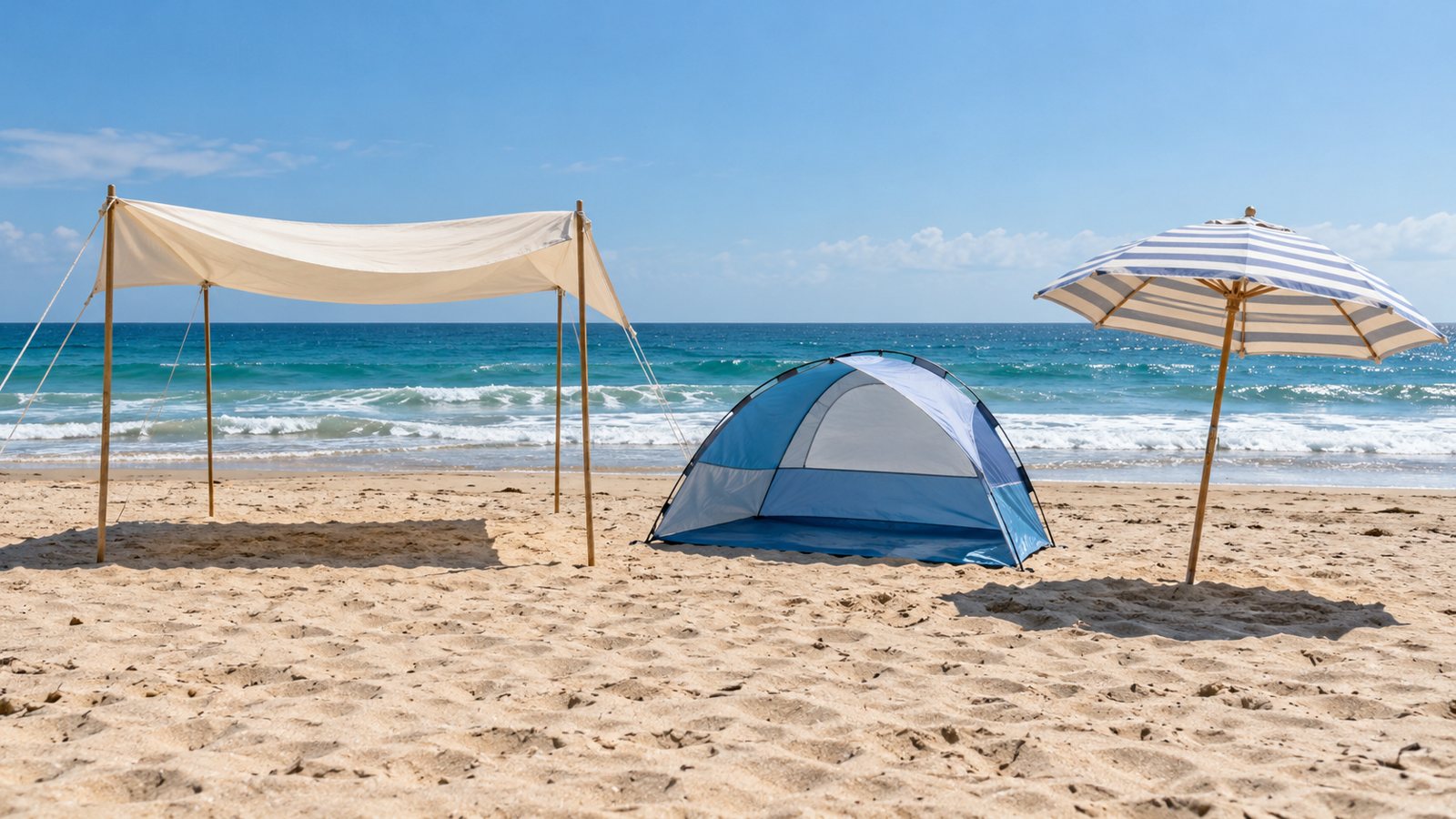
- Beach shade: see best beach shade tents
- Brimmed hat: see best UPF sun hats
- Sun shirt: see best sun shirts
- UV400 sunglasses: see how to choose sunglasses
- Broad-spectrum sunscreen SPF 15+
At the beach
- Reapply after 2 hours and after swimming or toweling off.
- Keep babies under 6 months in shade. See sun safety for kids.
Why each item is on the list
UV Index. The CDC says the UV Index forecasts how strong UV rays will be each day. At 3 or higher, protect your skin. UV reaches you on cool and cloudy days too, so check the index even when it is overcast.
Timing. In the continental US, the CDC says UV is strongest from 10 a.m. to 4 p.m. during daylight saving time, or 9 a.m. to 3 p.m. on standard time. Its sun-safety videos suggest planning outdoor time for the morning, late afternoon and evening.
Reflection. The CDC says UV reflects off water, sand, cement and snow. A beach exposes you to two of those at once, so shade alone does not cover you.
Shade, clothes, hat and glasses
| Item | What the CDC says |
|---|---|
| Shade | An umbrella, tree or other shelter lowers your risk. Still use sunscreen and protective clothing in the shade. |
| Clothing | Long sleeves and long pants or skirts when you can, or at least a T-shirt or cover-up. Tightly woven fabric protects best. Darker colors may protect more. A wet T-shirt protects less than a dry one. |
| Hat | A brim all the way around shades your face, ears and the back of your neck. Tightly woven canvas works best. Avoid straw hats with holes. With a baseball cap, cover your ears and neck another way. |
| Sunglasses | Block both UVA and UVB. Wraparounds keep UV from coming in at the sides. |
Since a wet shirt protects less, pack a dry spare if you plan to swim in your cover-up.
Sunscreen, done right
- Apply broad-spectrum SPF 15 or higher before you go outside. The CDC says to use a thick layer on all exposed skin.
- Ask someone to help with your back and other hard-to-reach places.
- Reapply if you are out more than 2 hours, and after swimming, sweating or toweling off.
- A sunscreen with no expiration date lasts no more than 3 years. The CDC says the shelf life is shorter if the bottle has been exposed to high temperatures, so keep it out of a hot car.
Babies
The CDC says sunscreen is not recommended for babies 6 months or younger. It cites the FDA’s advice to keep infants out of the midday sun and to dress them in protective clothing if they must be in the sun.
Quick timeline
| When | Do |
|---|---|
| Night before | Check UV forecast and sunscreen date; pack shade, hat, shirt, glasses |
| Before leaving | Apply sunscreen to all exposed skin |
| On arrival | Set up shade first |
| Every 2 hours, and after each swim | Reapply sunscreen; swap to a dry shirt |
| Midday | Spend the peak UV hours in the shade |
Frequently asked questions
What time should I go to the beach?
CDC suggests morning, late afternoon or evening, since UV peaks 10 a.m. to 4 p.m. daylight time.
How often should I reapply sunscreen?
After two hours in the sun and after swimming, sweating or toweling off, per CDC.