How to Choose Sunglasses That Block UV
Eye doctors checklist for sunglasses.
We may earn a commission when you buy through links on this page, at no extra cost to you. This does not change which products we cover. How we make money.
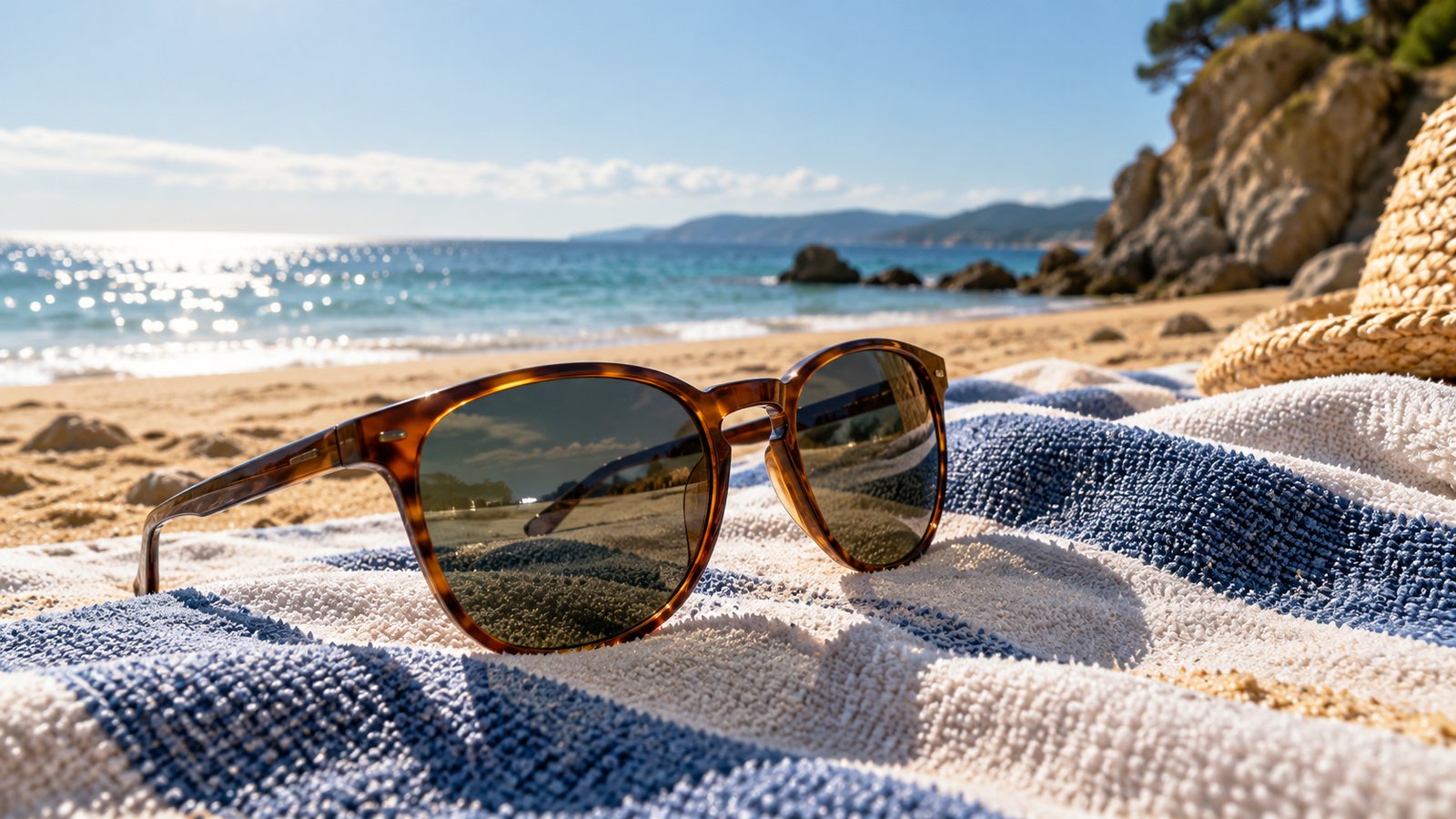
What to look for
- A label that says 100% UV protection or UV400, per AAO.
- Wraparound or large frames. CDC says wraparounds keep UV from sneaking in at the sides.
- Darkness and price are not guides. AAO says lens color and cost do not show UV protection. CDC notes most US sunglasses meet the UVA/UVB standard regardless of cost.
- Polarized is about glare, useful near water or snow.
Add a hat
A brimmed hat blocks more light from above. See best UPF sun hats.
Why it matters for your eyes
The AAO says sunglasses are essential in every season, not only summer. UV rays, including UVA and especially UVB, damage the eye’s surface, cornea and lens. That damage can lead to cataracts, macular degeneration and other conditions that can permanently harm sight. The CDC adds that sunglasses also protect the skin around your eyes.
Features the AAO recommends
| Feature | AAO guidance |
|---|---|
| UV label | Look for a sticker or tag promising 100% UV protection. “UV absorption up to 400nm” is also acceptable. |
| Lens size | Oversize lenses give the most coverage; wraparounds also block UV coming in from the sides. |
| Optical quality | Look at a rectangular pattern through the lenses with one eye covered and move them slowly side to side and up and down. If the lines wave or wiggle, especially in the center, choose another pair. |
| Impact | All US sunglasses must meet FDA impact standards. Plastic shatters less readily than glass. Polycarbonate withstands stronger impacts for sports; get a scratch-resistant coating, because uncoated polycarbonate scratches easily. |
Myths the AAO corrects
- Darker is not safer. Only 100% UV protection provides the safety you need.
- Polarized does not mean UV-blocking. Polarization cuts glare off water and roads, which helps with driving, boating and golf. Check the label separately for UV protection.
- Color and mirror finishes are style. Amber or gray lenses do not necessarily block more sun. Brown or rose lenses add contrast for sports like golf or baseball. Mirror coatings reduce light but do not fully block UV.
- Price is not protection. Drugstore sunglasses labeled 100% UV-blocking beat designer pairs with no protection.
What sunglasses cannot do
Normal sunglasses do not protect your eyes from tanning beds, snowfields or arc welding, which need special filters. They do not make it safe to look at the sun, including during an eclipse. The AAO warns this can cause photokeratitis, which is painful and can damage the retina and central vision.
Old pairs
The AAO says it is not clear whether UV protection fades over time. A local optical shop can test the UV protection of your current pair.
Frequently asked questions
What does UV400 mean?
The lenses block light up to 400 nm, which covers UVA and UVB.
Do polarized lenses block UV?
Polarization cuts glare. It does not by itself block UV, so check the label.